
Margaret Lea and Sam Houston did they have a true love story?
Sam was a star!
As happens with any star or celebrity, ( Sam Houston was definitely a celebrity in 1840) Margaret Lea was in awe and flattered when the legend had affections for her. She was 21-years-old and he 47-years whenhe offered marriage, she was not about to turn him down. To the young woman Houston was quite impressive. After all, he was not a person who generated indifference. His flamboyant clothing, confidence and demand for attention inspired people to take notice. Besides that, he was the man that lead the army that defeated Santa Anna, thereby creating the Texas Republic, of which he had been president. Margaret Lea’s heart was captured and taken to Texas.
At a time when life was full of uncertainty, religionwas an invaluable source of strength for many people. Margaret was no different although some historians believe she was more religious than other women of her time. A deeply religious and private woman, she provided Sam Houston with unwavering support, tempering his sometimes volatile nature with her steadfast faith.
On May 9, 1840, at the age of 47, Sam Houston wed the 21-year-old Margaret Moffette Lea, the daughter of Alabama planters. Their marriage spanned two decades and resulted in the birth of eight children.
Sam Houston Jr., was followed by Nancy Elizabeth and Margaret Lea Mary William, Antoinette Power, and Andrew Jackson Houston came next, with the youngest being William Rogers Houston and Temple Lea Houston.
For many years she traveled with Sam around the wilds of Texas while he campaigned for his many elected positions (President, Governor, senator etc.). In the early years of their relationship, while campaigning, the couple slept beneath Live Oaks and on a bed of leaves while moving from city to city. Slaves and then servants traveled with the Houston’s, so one could guess that Margaret’s toils were not so great, but still… I have slept in a Gore-Tex tent in a down sleeping bag and found myself complaining about having to go out in the rain to relieve myself. Camping in the 1840’s must have been challenging for everyone.
In those days, it took days to travel from Houston to Austin, so campaigning in all the towns of Texas was very time consuming. eventually, as more children came along, Margaret settled down and let Sam go on his own. However, the family did move from Huntsville to Independence and back again at least two times and to and from their homestead to Austin three times. So when I say she settled, it is in the spirit of relativity.
Sam was a restless and moody fellow who had trouble spending long periods of time in solitude and isolation of the family farm. He longed for conversation, debate and attention. So, when he was not in political office he often continued to travel, with his servant, Joshua Houston.
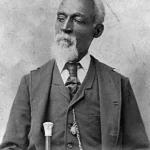
The longest length of time he spent at home with his family was 6 months.
TSHA “Joshua and his family came with Margaret Lea, to Texas in 1840. During the Republic of Texas Joshua traveled with Houston and became a skilled blacksmith, wheelwright, and stage driver. He helped build the Houston home at Raven Hill. The Houstons taught him to read and write, though teaching slaves literacy skills was discouraged in Texas at the time.”
Margaret was a devote Baptist.
At a time when life was full of uncertainty, religion was an invaluable source of strength for many people. Margaret was no different. Some historians believe she was more religious than other women of her time. For instance, after years of anxiety and persuasion she finally convinced Sam to get baptized. She was a spiritual woman living in an untamed land at a time when the Bible was the only means of transcending the uncertainty, vulnerabilities, tribulations and triumphs of mortal life.
Margaret Lea Houston suffered from malaria and asthma.
The birth of Margaret’s eighth and last child was in 1860, three years before Sam’s death at the age of seventy one. Sam died one year after he resigned as Governor of Texas, refusing to support session from the Union.
The state legislature delayed until 1867 to give Margaret the unpaid balance of Houston’s salary as governor, leaving her in a state of financial distress. She moved to Independence near her mother until the money arrived, then began planning to move to Georgetown to live with her married daughter, Nancy Morrow, a trip she never made as she contracted yellow fever and passed away while still in Independence.