

Washer-Women Communities of Waller Creek (Austin, Texas)
The Washer-Women Communities of Waller Creek were informal settlements of African American laborers, primarily laundresses and their families, who lived and worked along Waller Creek in Austin, Texas, during the late nineteenth and early twentieth centuries. Concentrated near what is now Waterloo Park and the Waterloo Homestead, these communities developed in the decades following the American Civil War as formerly enslaved people sought economic independence and self-determined lives in the city.
Overview
- Location: Moonshine’s and Waller Creek floodplain, east of downtown Austin, Texas
- Period of activity: 1865 – 1930s
- Primary population: African American washer-women and their families
- Related communities: Red River Community, Wheatville, Clarksville
- Key occupations: Laundry work, domestic labor, carpentry, small commerce
Historical Background
Emancipation and Urban Settlement
Following the Civil War and the emancipation of enslaved African Americans in Texas (June 19, 1865), newly freed individuals migrated to urban centers such as Austin seeking opportunity. Because land within the city center was expensive and racially restricted, many Black families settled on the low-lying, flood-prone lands along Waller Creek, which were considered undesirable by white landowners. These families established clusters of cabins and small homes from roughly East 6th Street to East 19th Street, bounded by Red River and Sabine Streets.
This area would come to be known locally as part of the Red River Community, one of Austin’s earliest African American settlements.
Economic Life
Washer-Women and the Laundry Trade
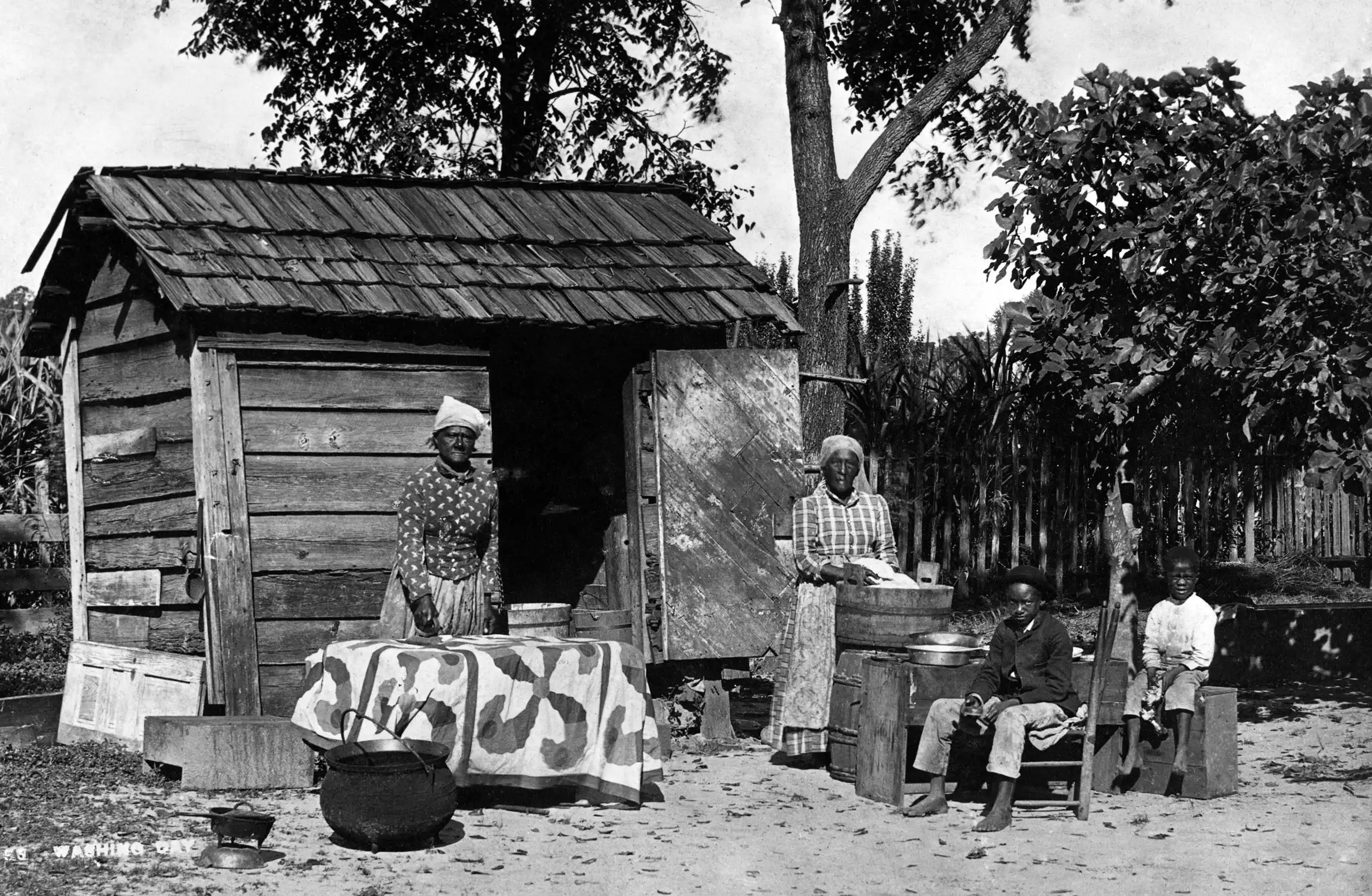
Laundry work—often referred to in city directories as “washing and ironing”—was among the most common forms of paid employment for African American women in Austin during Reconstruction and into the Jim Crow era. Lacking access to wells or plumbing, washer-women relied on the clean, running water of Waller Creek for their work.
Daily labor typically involved hauling water, scrubbing garments by hand on wooden washboards, boiling linens in large iron pots over open fires, and drying clothes along the creek banks.
This physically demanding work provided modest but vital income and autonomy for Black women. It also linked them to a citywide informal economy that depended heavily on their labor, as they provided laundry services to white households, hotels, and businesses across Austin.
Gender and Community Roles
Washer-women were often heads of households and community organizers. They contributed economically to churches and schools, paid rent or land installments, and maintained small gardens and livestock near the creek. Oral histories describe them as central figures in sustaining Black family and social life in post-emancipation Austin.
Community Institutions
Churches and Schools
By the 1870s, records show that the community supported a Colored Methodist Church and the Evans Community School, which served around 150 students in 1876. These institutions offered education and social support despite limited municipal investment.
Environmental and Social Challenges
Living along Waller Creek posed significant hardships. Seasonal floods frequently destroyed homes and property, while the proximity to downtown exposed residents to city ordinances that targeted “shantytowns” for removal. Despite these conditions, the community endured for decades, embodying resilience in the face of economic marginalization and racial discrimination.
By the early twentieth century, Austin’s urban planning began to encroach on these neighborhoods. The 1928 Koch-Fowler City Plan designated East Austin as the city’s “Negro district” and proposed converting central lowlands into parks and public spaces. This led to the gradual displacement of families along Waller Creek.
Urban Renewal and Displacement
From the 1950s through the 1970s, city-sponsored urban renewal projects—including the creation of Waterloo Park—formally erased much of the remaining Waller Creek community. Homes were demolished, and residents were relocated to East Austin.
While framed as flood mitigation and beautification, these projects reinforced racial segregation and dispossession. Similar patterns affected other historic Black communities in Austin, including Clarksville and Wheatville.
Legacy
Preservation and Recognition
Contemporary efforts to honor this history include:
- Waterloo Greenway Conservancy, which manages Waterloo Park and has installed interpretive signage acknowledging the area’s Black heritage.
- Public history projects by organizations such as Contextualizing Texas (CTX Retold) and the Austin History Center, which document the lives of washer-women and early African American residents along Waller Creek.
- The Hamilton House remains a physical reminder of the community’s presence and resilience.
Scholarly Significance
Historians view the washer-women communities as part of Texas’s network of freedom colonies—self-organized African American settlements that emerged after emancipation. They provide insight into the intersection of race, gender, labor, and environment in the formation of post-Civil War urban landscapes.