

Texas Bad Girls. Hussies, Harlots and Horse Thieves. By J. Lee Butts. Published by Republic of Texas Press. 2001.
This chapter is titled: Texas Biggest Harlot Sarah Bowman.
It’s not outside the realm of believability that Sarah Bowman had more than a handshaking and familiarity with some of the most famous military men of America’s 19th century. She met them on a beach in South Texas.
In October of 1845, General Zachary Taylor landed an expeditionary force of 3000 men near Corpus Christi in preparation for the conflict everyone knew would come when Texas achieved statehood. The purpose of this occupation of hotly disputed lands was to make it absolutely clear to Mexico that the United States had determined to keep their new acquired territory, no matter the cost.
Taylor, elected our 12th president in November of 1848. Counted among his subordinate officers a sizeable group of lesser known that included Ulysses, S. Grant George B, McClellan, Thomas Stonewall Jackson, PGT Beauregard, and Robert E Lee. Our neighbors south of the border were not a bit happy about this, what they considered an invasion and promised to do the La Cucaracha on Taylor as soon as his soon to be famous subordinates, given their first opportunity.
A Sergeant named BOURJETT. An active member of the 7th Regiment of Infantry, was followed into this bubbling political cauldron by his Spitfire of a wife, Sarah. Born in 1813, Sarah Knight Bourjett, her first 35 years were lost to us, but given her vocation when she arrived on the beach, it’s fairly easy to speculate that this was not her first camp follower experience. Gossip had it that she’d been with General Taylor during his Seminole campaign, but Corpus Christi was their first showing that can be proven through eyewitness accounts.
The phrase camp follower is nothing more than another euphemism for prostitute. Harlot, soiled dove, lady of the evening, fallen Angel, woman of ill fame, can’t follower, They’re all the same. Many forget that the term “hooker” the most common used description for these women today came from General Joe Hooker, who allowed prostitutes free access to his troops during the Civil War. They soon became known as “Hookers Girls”. Eventually, patrons of the Red Light District of Washington DC referred to it as “Hookers Division”. Local harlots were called hookers.
When Taylor waded ashore in South Texas, women could not join the armed forces and fight in the trenches except by deceit and disguise. But they could marry a man in the service and enroll with him as a cook or laundress. This allowed them to follow their husbands from battle to battle, providing food, clean clothing, companionship, encouragement, and something loosely referred to as personal services.
The single element that distinguished Sarah from all other women trailing Taylor’s army had to be her size. Big as a skinned moose, she stood 6 foot, two inches tall and weighed over 200 pounds. That might not sound like much, but the average man in 1845 achieved a height of about five foot seven inches and weighed less than 150 pounds soaking wet and holding a big rock in each hand. Fed and ready for market, Sarah Bourjett was gigantic.
Austin Ghost Tours
Soon after her arrival, she adopted the nickname Great Western. Historians believe this title referred to the first steamship to cross the Atlantic in 1838. Probably the biggest thing men could think of to compare her with, The 238 foot long craft was the Titanic of its day. When the 1320 ton vessel arrived in New York. Astonishing crowds of spectators lined the docks and gaped in amazement. Evidently, the men of Taylor’s command were equally stunned with the size and commanding presence of Mrs Bourjett. A shock of flaming red hair that dropped to her waist and charming good looks only added to their surprise and fascination. The nickname stayed with her, but none of the other six to eight names given her by various husbands and paramours survived more than a few years at a time.
After an absolutely horrific winter of freezing wind and icy rain and miserable living conditions, Taylor moved his troops off the beach in March of 1846 and turned south for Matamoras. By now, almost every man in camp knew Sarah. She cooked for Taylor’s young officer corpse, cleaned their uniforms, and saw to their comfort when needed. Her pseudo military title of Londris could never approach a description of the intimate assistance she provided. There was absolutely no way her military record could contain a notation like biggest, and we do mean biggest strumpet in the entire, whole and complete army.
On March 20, 1846,, General Taylor halted his forces on the banks of the Colorado River. A Mexican officer on the other side drew a line in the water with his Saber and dared the Americans to crossover. Epithets such as. Hijo de puta. Assaulted the tender ears of Taylor’s rugged company. Sarah heard the exchange and detected a certain arrogance in the opposition’s curses and pronouncements. Enraged by such impudence, she strode majestically to the water’s edge, and let all the soldiers within shouting distance know she’d wade the river alone and personally kick every senior on the other sides behind till his nose bled. Provoked by such swaggering bravado, the Americans let out a piercing Texas yeehaw and charged their adversaries, like the devil himself chased them. The Mexican vamoosed.
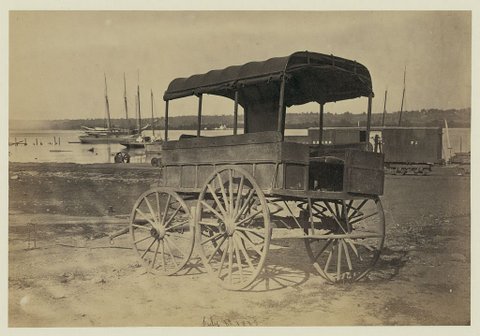
This lack of resistance allowed Taylor to push his column all the way to a spot N of Matamoras, where he stopped and had his men build Fort Texas. Sarah, who had purchased her own wagon for the trip, Refused to stay behind on the Colorado and joyfully continued her duties under the bleakest of circumstances.
Before the earthen Fort could be completely finished, Taylor got word that Mexican forces threatened his supply depot at Point Isabel. He left 500 men under the command of Major Jacob Brown at Fort Texas and rushed back to save the reserves so vital to his continued campaign. The sick, injured, and women were supposed to stay inside the bomb proof areas of the Fort and await his return. Sarah ignored the general’s order.
The bombardment of Fort Texas commenced on May 3, 1846. Sarah vigorously worked the walls, delivering heavy doses of caffeine and hot meals for the artillery men. Every day at noon, she served up a big bowl of her special Sopa di Hudias. This highly secret bean soup recipe invested the American soldiers with such a fearsome enthusiasm for the battle that their rivals spoke of the mixture in tones usually reserved for miracles associated with prominent Saints of the Church.
The Mexican barrage continued for a week. On a single day, more than 1500 exploding shells thumped and whomped over Sarah’s head as she fought, cooked, nursed the wounded, and saw to whatever needs arose.
Sarah Bowman’s burial location