
Washerwomen Community
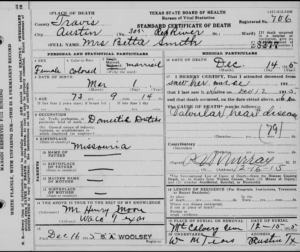
305 Red River, today the Sunday House was the home of the Smith family for at least 10 years before 1900 and more than 10-years after. According to the federal census of 1900 Bettie was an African American woman born into slavery in Missouri who lived in Austin, Texas and was a washerwoman. She was a married and lived with her two daughters Marie and Anni, also a washerwomen, and Anni’s 7-year-old son Clarence. Also, her brother Don and 90-year-old family friend David Eliot.
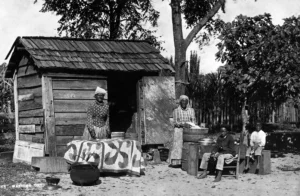
Just behind the Sunday House, in the Federal Census the address is sometimes refered to as 305 ½ Red River Street today known as the Carriage House and is part of the Moonshine Grill compound. Sometimes in the census, the 305 Red River address includes both locations. On and off throughout the over 20-years that the Smith’s called this house a home, Frank and Bettie Swisher lived at 305 1/2.
Both husband and wife were former enslaved people. Frank was the son of George Swisher the enslaved person of Jame G. Swisher signer of the Texas Declarationof Independance. Both were Austin’s first residents. Frank Swisher died at 305 Red River in November of 1923.
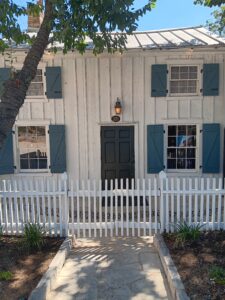
The Sunday House today.
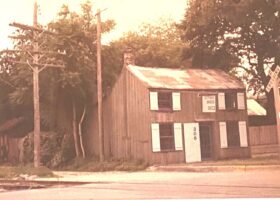 Visible behind Moonshine proper is another little house, the entrance used to face the alley and for years was the home of two women Nona a 70-year-old widow and washer woman and 35 year old Josie an ironer, a person who ironed clothing using a flat iron, both African American. Other members of the communal washing station were Henry and Hattie Robinson and their 3 children and Henry’s widowed mother, both mother and wife were washerwomen. Just up the block also on 3rd Street their kinfolk resided – 46 year old Ann and husband John Robinson, She too was a washerwoman. One block north of the compound lived Marcia 44 and Annie 21 both washerwomen.
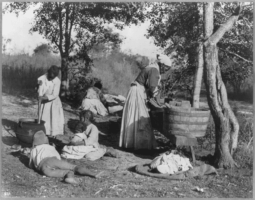
Making Lye Soap
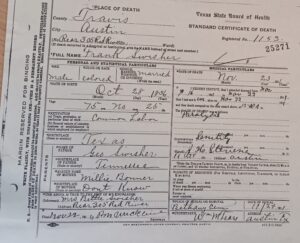
This information is on Find a Grave Memorial and is a quote from the book: The Swisher Memoirs by John Milton Swisher Introduction by Annie Lane Blocker (niece)pg 4 referring to her grandmother Elizabeth Boyd Swisher, wife of James Gibson Swisher, signer of Texas Independence.
“One family of her former slaves lived with her until her death in 1875. The man of this family, a tall, very black fellow called Uncle George, attended to the farm, and all during the Civil War he drove ox-wagons to Mexico with her cotton, where he sold it and brought the money back to her, –never giving a thought to the fact that when he was in Mexico he was free.”
Bettie and Frank Swisher donated their land for what is today called the Jackson Family Cemetery in West Lake Hills, Travis County Texas.
On December 3, 1870 Alexander Eanes sold Frank Swisher, a black man who lived in Austin, 56 acres of his land. Swisher later sold 15.5 acres to the Jackson’s, descendants of Nathan Wood, who had been living on the land for over 30-years. The deed read “ less about one half acre existing at the North end of the tract which is hereby reserved for a graveyard for the use of the neighborhood.” On the same day an additional adjacent 10.5 acres was sold to other members of the Jackson family, and a similar clause was included in the deed, it read “ less about one half of said land set apart for a burying ground for the neighborhood and which lies along the northeast line of the same.”